

Signature Components
The Sigsync Signature Editor provides a set of built-in components that allow you to design structured and customizable email signatures for Office 365. Each component is designed to handle a specific part of the signature, such as layout, text, images, dynamic user details, or interactive elements.
By combining these components, you can create email signatures that are consistent across users while still supporting dynamic information pulled from Office 365. This page explains each available signature component and how it can be used to build professional, well-organized email signatures.
- Tables
- Text and Disclaimer
- Space and New line
- Active Directory (AD) Fields
- Images and Icons
- Social Media
- QR code
- OneClick
- Analytics Link
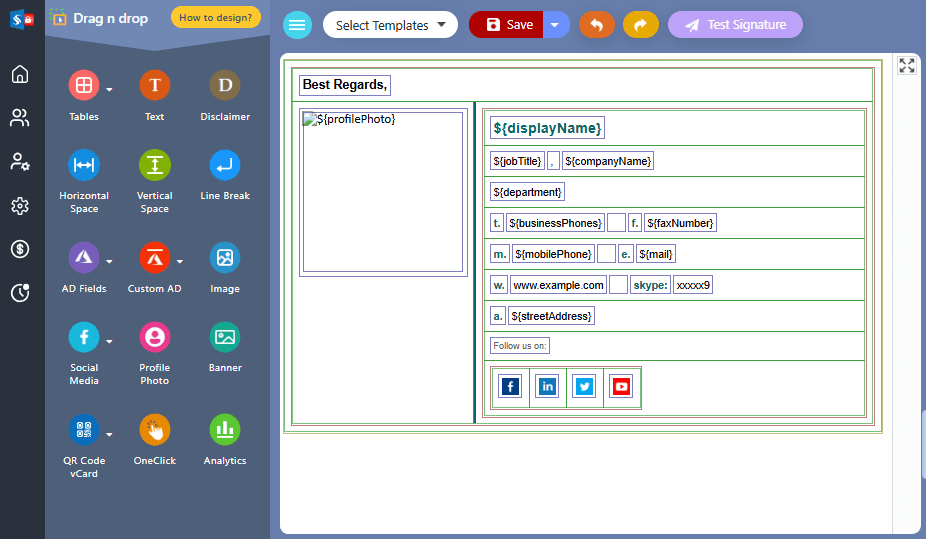
1. Tables
Using tables in email signatures helps maintain a consistent layout across different email clients and screen sizes by keeping signature elements such as text, images, and contact details properly aligned. This reduces the risk of layout issues and helps preserve a professional appearance. Sigsync offers flexible and customizable table components that allow you to structure your email signature effectively, enabling you to design well-organized signatures while ensuring consistency and reliability across all supported platforms.
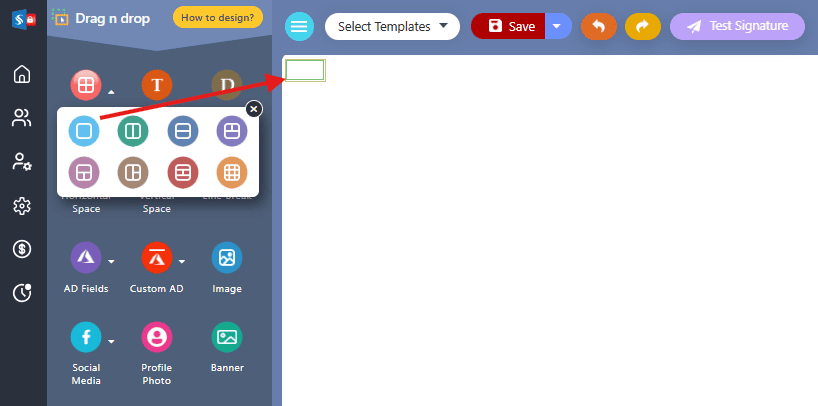
Sigsync provides several predefined table layouts. In addition, you can choose custom tables by specifying the required number of rows and columns. This gives you greater control over the structure of your signature, allowing you to design layouts that match your formatting requirements.
2. Text and Disclaimer
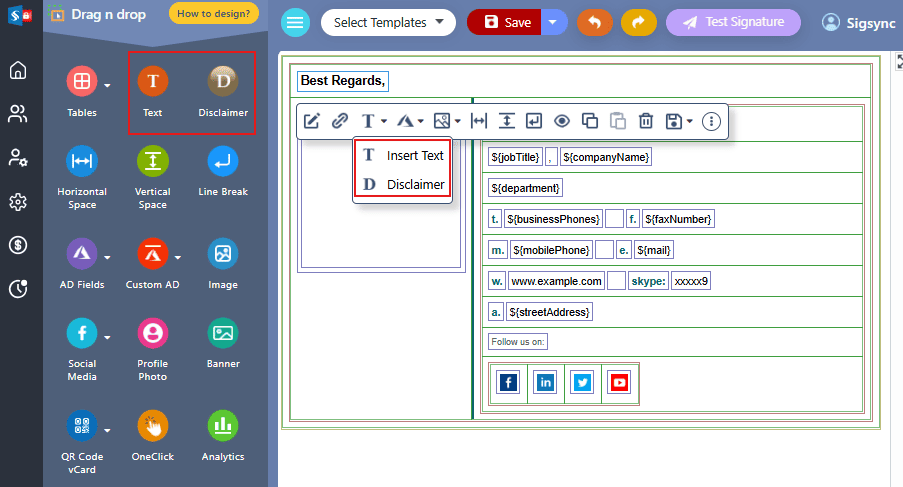
The Sigsync Editor provides flexible components for adding Text and Disclaimer content to email signatures. These components allow you to include custom text and mandatory disclaimer information while maintaining consistency across all signatures.
- Text: The Single-line Text component allows you to add a single line of text to your email signature template. This component is commonly used to include details such as phone numbers, website links, or company names, helping present essential information in a clean and structured format.
- Disclaimer: The Disclaimer component is used to add legal or regulatory statements to email signatures. It helps ensure that the required disclaimer text is included wherever needed. The content can be formatted to match the signature design.
3. Space and New Line
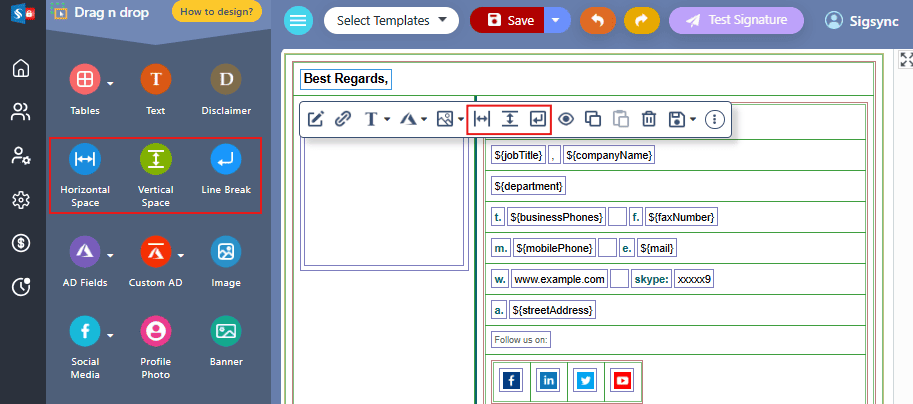
The Space and New Line components help you control spacing and layout within your email signature. These options allow you to organize signature elements clearly and improve overall readability.
- Horizontal Space: The Horizontal Space component adds blank space horizontally to separate elements like your name, job title, or contact information.
- Vertical Space: The Vertical Space component adds blank space vertically to separate lines or sections, keeping your signature organized and easy to read.
- Line Break: The Line Break component allows you to insert a line break between signature fields. It helps separate content line by line. This ensures a clean and organized signature layout.
4. Active Directory (AD) Fields
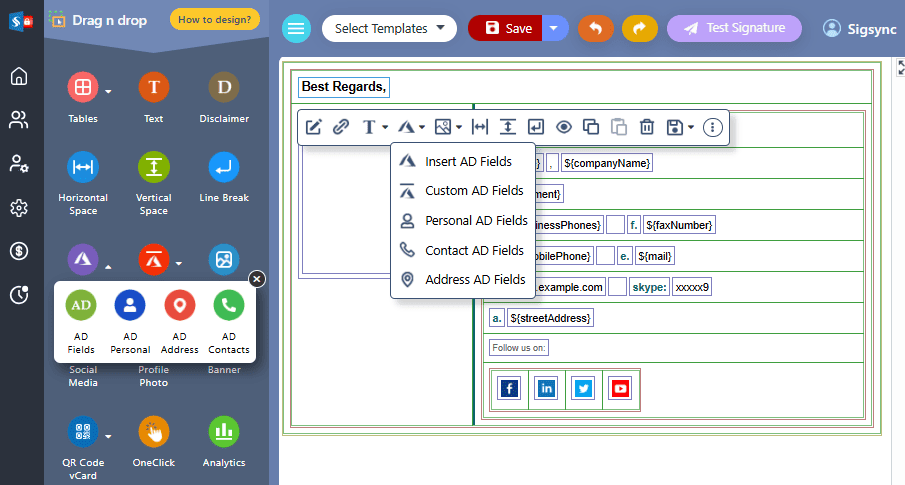
Sigsync allows you to include dynamic Active Directory (AD) fields in your email signatures. These fields automatically populate with information from your Active Directory, ensuring that each user’s signature displays accurate and up-to-date details. Using AD fields reduces manual entry and ensures consistency across all signatures.
- AD Fields: Automatically inserts user details such as first name, last name, job title, department, office location, phone number, company name, and address into the signature.
- AD Personal: Adds a group of personal fields at once, including display name, job title, and company name, for quick and easy personalization.
- AD Address: Inserts a complete set of address fields such as street, city, state, and country to display full location information.
- AD Contact: Adds essential contact details in one step, including business phone, mobile number, fax, email address, and website.
- Custom AD: Allows inclusion of custom Active Directory attributes from Office 365 to display specialized or organization-specific information.
- Message Properties: Dynamically inserts email-related details such as message ID, subject, sent date, current date/time, or recipient information into the signature.
5. Images and Icons
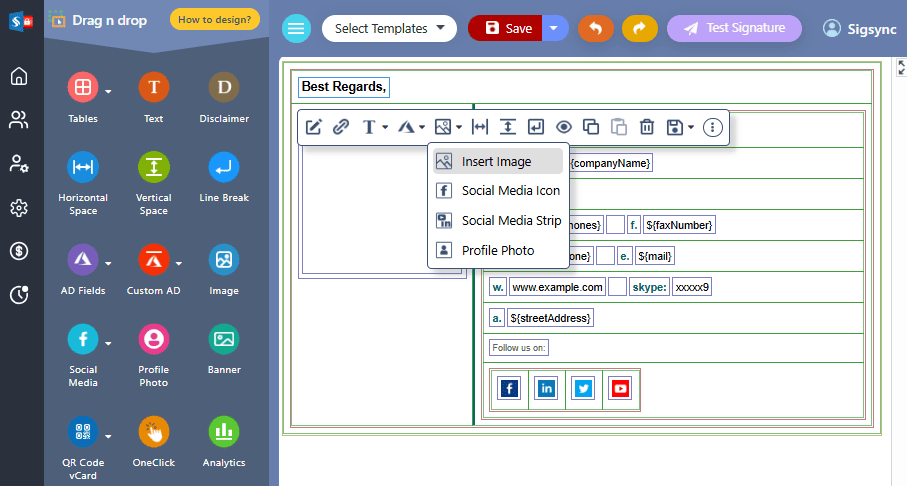
The Images and Icons component in the Sigsync editor allows you to enhance your email signature with visual elements. You can add images, icons, banners, and Active Directory profile photos to make your signatures visually appealing and professional.
- Image: Insert custom images such as company logos or graphics to strengthen and maintain brand identity.
- Profile Photo: Automatically displays the sender’s Active Directory profile photo to personalize email signatures.
- Banner: Add banner images to promote campaigns, share announcements, or highlight important messages directly within the signature.
6. Social Media Component
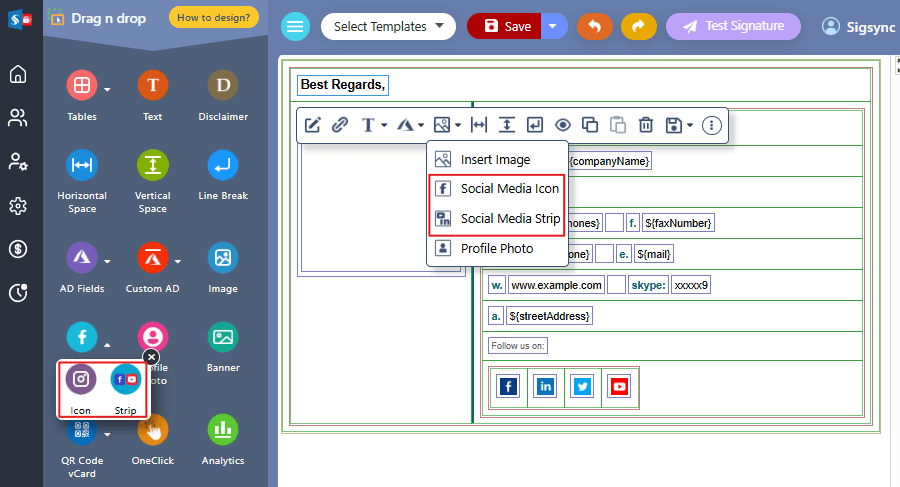
The Social Media component allows you to add social media links to your email signature, making it easy for recipients to connect with you on platforms like Facebook, Twitter, LinkedIn, Instagram, and more.
- Icon: Add individual social media icons with clickable links to specific profiles for direct engagement.
- Strip: Display social media icons in a horizontal or vertical strip to maintain a clean, organized, and visually consistent signature layout.
7. QR Code Component
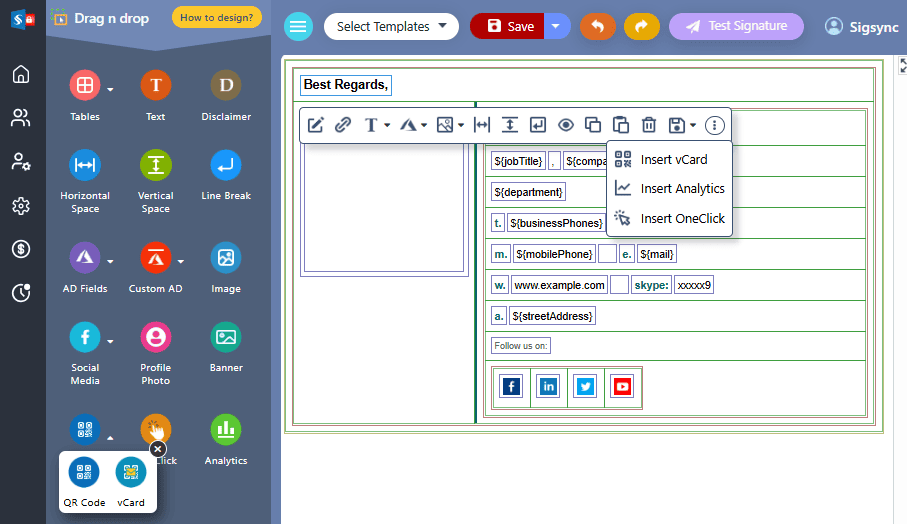
The QR Code component allows you to include a scannable code in your email signature, providing recipients with an easy way to access additional information instantly. This can be used to share your website, social media profiles, or contact details. By integrating QR codes, you can make your email signature more interactive and convenient for recipients to save or access important information.
- QR Code: Generates a scannable code that can link to your website, social media profile, or other resources.
- vCard: Enables recipients to quickly save your contact details to their device by scanning the QR code.
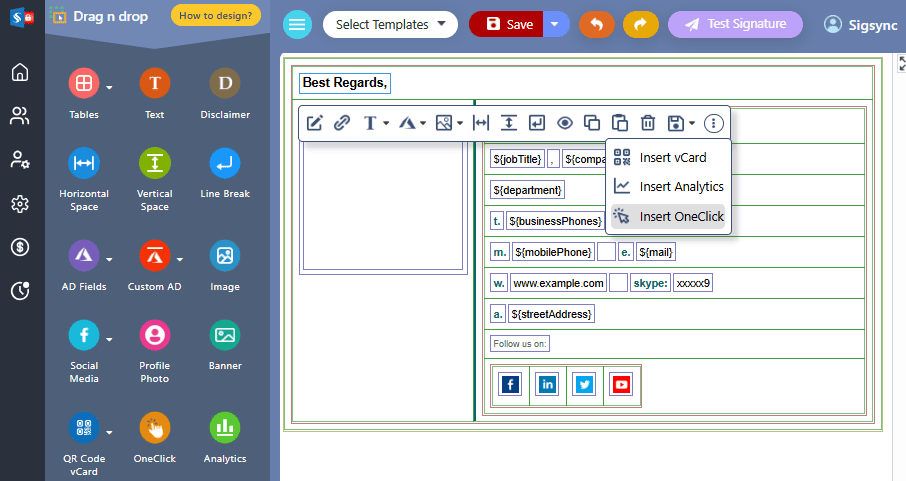
8. OneClick CSAT Survey
The QR Code component allows you to include a scannable code in your email signature, providing recipients with an easy way to access additional information instantly. This can be used to share your website, social media profiles, or contact details. By integrating QR codes, you can make your email signature more interactive and convenient for recipients to save or access important information.
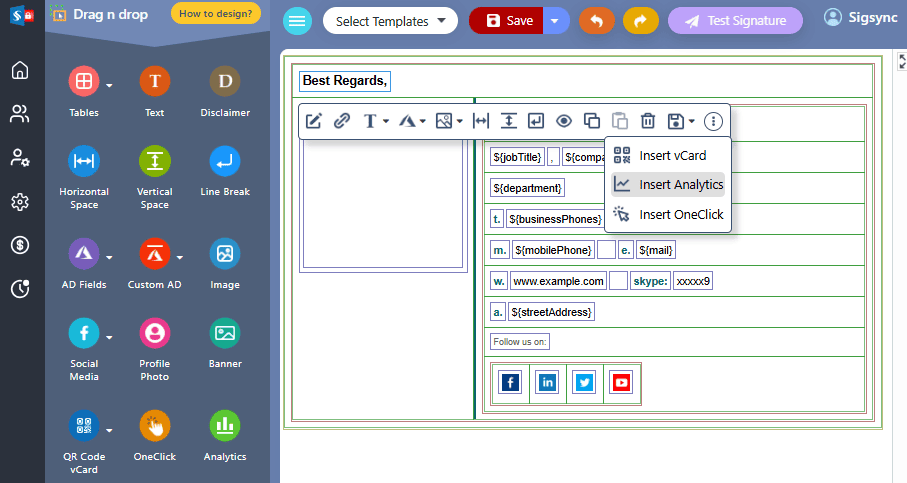
9. Analytics Link
The Analytics Link component allows you to add tracking links to your email signature. This helps monitor user activity, behavior, and engagement, including actions such as page views, clicks, and the number of users interacting with your links.
Next Navigate To:
In this manual